
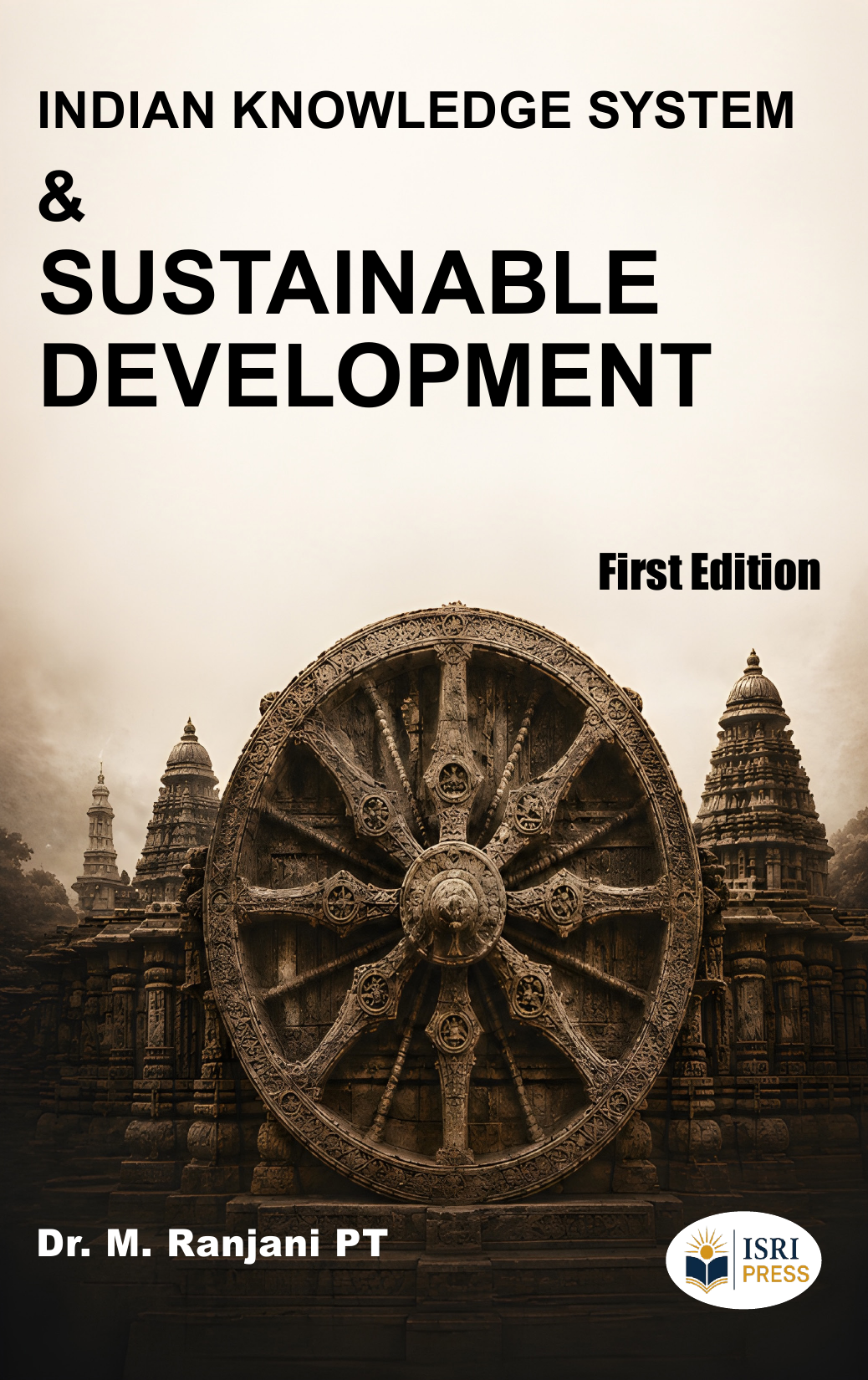
Indian Knowledge System and Sustainable Development: Bridging Ancient Wisdom with Contemporary Sustainability Discourse
About the Book
Indian Knowledge System and Sustainable Development explores the profound relationship between India’s ancient wisdom traditions and the contemporary global agenda of sustainability. In an era defined by ecological crisis, climate instability, biodiversity loss and social inequity, this book argues that the answers to humanity’s most pressing challenges may already be embedded within Indian civilizational knowledge.
Drawing on the Vedas, Upanishads, Ayurveda, Yoga, Arthashastra, Vastu Shastra and indigenous ecological practices, the book systematically demonstrates how these traditions align with the United Nations Sustainable Development Goals and modern sustainability discourse. Guided by principles such as Vasudhaiva Kutumbakam (the world is one family), Dharma (ethical duty) and Ahimsa (non-violence), the text examines indigenous agricultural systems, traditional water conservation, community governance, holistic medicine, sustainable architecture and ecological ethics, tracing their practical relevance for modern challenges including climate resilience, circular economy models and ethical AI frameworks.
Critically and constructively, the book also addresses the challenges of integrating traditional knowledge into contemporary institutions, policy frameworks and educational systems without compromising authenticity or intellectual rigour. Designed for academicians, policymakers, sustainability researchers, students and practitioners of indigenous studies, this volume bridges ancient wisdom and modern science to chart ethical and practical pathways toward a balanced, inclusive and sustainable future.
Key Features
- 10 interdisciplinary chapters from Vedic philosophy to global SDG alignment
- 24 tables and 23 figures for clear, visual learning
- Covers Ayurveda, Yoga, Vastu Shastra, Arthashastra and indigenous ecology
- Aligns Indian knowledge traditions with UN Sustainable Development Goals
- Addresses AI ethics, digital knowledge preservation and circular economy
- Designed for students, researchers, educators and policymakers
Target Audience
Designed for academicians, policymakers, sustainability researchers, students, environmentalists, and practitioners of indigenous studies, this book offers both theoretical foundations and practical pathways for achieving sustainable futures through Indian knowledge traditions.
Keywords
Keywords: Indian Knowledge System, Sustainable Development, Vedic Philosophy, Ayurveda, Dharma, Ahimsa, Vasudhaiva Kutumbakam, Ecological Ethics, Traditional Agriculture, Water Conservation, Indigenous Education, Yoga, UN Sustainable Development Goals, Circular Economy, Climate Resilience, Biodiversity, Cultural Sustainability.
Contents
| Chapter | Title | Page |
|---|---|---|
| Copyright | 1 | |
| Publisher’s Note | 2 | |
| Abstract | 3 | |
| Preface | 5 | |
| Acknowledgement | 6 | |
| Meet the Author | 7 | |
| List of Tables | 11 | |
| List of Figures | 12 | |
| List of Abbreviations | 13 | |
| Chapter 1 : Foundations of Indian Knowledge System | 15 | |
| 1.1 | Introduction to Indian Knowledge System | 16 |
| 1.2 | Historical Evolution of Indian Civilization | 17 |
| 1.3 | Philosophical Foundations of IKS | 19 |
| 1.4 | Vedas, Upanishads, and Classical Traditions | 22 |
| 1.5 | Concept of Dharma and Sustainability | 23 |
| 1.6 | Holistic Worldview in Indian Thought | 25 |
| 1.7 | Relevance of IKS in the Modern Era | 27 |
| Chapter 2 : Indian Philosophies and Ecological Consciousness | 31 | |
| 2.1 | Nature in Indian Philosophy | 32 |
| 2.2 | Ecological Ethics in Hinduism | 33 |
| 2.3 | Buddhist Environmental Thought | 34 |
| 2.4 | Jain Philosophy and Non-Violence | 37 |
| 2.5 | Sacred Ecology and Biodiversity | 38 |
| 2.6 | Vasudhaiva Kutumbakam and Global Harmony | 40 |
| 2.7 | Ecospirituality and Sustainable Living | 41 |
| Chapter 3 : Traditional Agriculture and Food Sustainability | 43 | |
| 3.1 | Indigenous Agricultural Systems | 44 |
| 3.2 | Organic Farming Practices in India | 46 |
| 3.3 | Traditional Seed Preservation | 48 |
| 3.4 | Water-Efficient Farming Methods | 50 |
| 3.5 | Agroforestry and Biodiversity Conservation | 52 |
| 3.6 | Sustainable Food Systems and Nutrition | 54 |
| 3.7 | Climate-Resilient Agriculture | 56 |
| Chapter 4 : Water Management and Environmental Conservation | 60 | |
| 4.1 | Traditional Water Harvesting Systems | 61 |
| 4.2 | River-Centric Civilizations of India | 64 |
| 4.3 | Sacred Water Bodies and Ecology | 66 |
| 4.4 | Community-Based Resource Management | 68 |
| 4.5 | Forest Conservation Traditions | 69 |
| 4.6 | Indigenous Climate Adaptation Strategies | 71 |
| 4.7 | Environmental Ethics in IKS | 72 |
| Chapter 5 : Ayurveda, Yoga, and Holistic Health | 77 | |
| 5.1 | Foundations of Ayurveda | 78 |
| 5.2 | Preventive Healthcare in Indian Traditions | 81 |
| 5.3 | Yoga and Mental Well-Being | 82 |
| 5.4 | Sustainable Healthcare Systems | 85 |
| 5.5 | Herbal Medicine and Biodiversity | 86 |
| 5.6 | Lifestyle Management and Wellness | 87 |
| 5.7 | Global Relevance of Indian Healing Systems | 88 |
| Chapter 6 : Education and Knowledge Transmission | 92 | |
| 6.1 | Ancient Indian Education System | 93 |
| 6.2 | Gurukul Tradition and Holistic Learning | 95 |
| 6.3 | Knowledge Transmission Through Oral Traditions | 98 |
| 6.4 | Ethics and Character Building | 99 |
| 6.5 | Integration of IKS in Modern Education | 100 |
| 6.6 | National Education Policy and IKS | 102 |
| 6.7 | Future of Indigenous Education Systems | 104 |
| Chapter 7 : Sustainable Architecture and Indigenous Technologies | 108 | |
| 7.1 | Principles of Vastu Shastra | 109 |
| 7.2 | Eco-Friendly Construction Practices | 111 |
| 7.3 | Traditional Urban Planning | 113 |
| 7.4 | Indigenous Engineering Knowledge | 115 |
| 7.5 | Renewable Resource Utilization | 116 |
| 7.6 | Climate-Sensitive Architecture | 119 |
| 7.7 | Smart Sustainable Habitats Inspired by IKS | 120 |
| Chapter 8 : Governance, Economy, and Social Sustainability | 123 | |
| 8.1 | Arthashastra and Governance | 124 |
| 8.2 | Gandhian Economics and Sustainability | 125 |
| 8.3 | Village Self-Governance Models | 128 |
| 8.4 | Ethical Leadership and Public Welfare | 129 |
| 8.5 | Inclusive Development in Indian Traditions | 130 |
| 8.6 | Sustainable Economic Systems | 131 |
| Chapter 9 : Indian Knowledge System and Modern Science | 135 | |
| 9.1 | Scientific Traditions in Ancient India | 136 |
| 9.2 | Mathematics and Astronomy | 137 |
| 9.3 | Metallurgy and Engineering Innovations | 139 |
| 9.4 | Traditional Ecological Knowledge and Climate Science | 141 |
| 9.5 | Artificial Intelligence and Ethical Frameworks | 142 |
| 9.6 | Integrating Indigenous and Modern Science | 144 |
| 9.7 | Future Research Opportunities in IKS | 146 |
| Chapter 10 : Indian Knowledge System for Global Sustainable Futures | 149 | |
| 10.1 | Future Research Opportunities in IKS | 150 |
| 10.2 | Indigenous Knowledge and Global Policy | 152 |
| 10.3 | Sustainability Challenges in the 21st Century | 154 |
| 10.4 | Cultural Preservation and Knowledge Protection | 156 |
| 10.5 | Digital Preservation of Traditional Wisdom | 158 |
| 10.6 | Future Pathways for Sustainable Civilization | 160 |
| 10.7 | Conclusion and Vision for Humanity | 161 |
| References | 166 | |

Recommended Citation
APA 7th Edition